The Project
The Adaptive Management Cycle
Phase 1
DEFINE OBJECTIVES &
DEVELOP INDICATORS
- Outline current challenges.
- Define clear, measurable, common management objectives in line with biodiversity and societal values.
- Identify key indicators for wildlife populations, ecosystems, and human dimensions.
Goals & Indicators

Common definition of challenges, goals and objectives with all stakeholders. With particular focus on:
- Standardised data collection
- Biologic management units
- Sustainable exploitation
Phase 2
BUILD MODELS & FORECAST ALTERNATIVE SCENARIOS
- Define available data and run population models.
- Use models to explore future scenarios and uncertainties.
Models & Scenarios


Cantonal hunting institutions and scientists collaborate to produce population analysis and predictions.
Phase 3
MAKE EVIDENCE-BASED DECISIONS, IMPLEMENT & MONITOR OUTCOMES
- Evaluate trade-offs, select the best management options based on evidence, develop adequate protocols.
- Apply management actions in the field (e.g. harvest plans, habitat measures,…).
- Collect and analyse data (on the field and human dimension) to asses the effects of actions and external drivers.
Fact-based Decisions

Cantonal hunting institutions lead the decision making based on the data and models analysed in the previous step and plan the execution of management efforts.
Implementation



Implementation efforts are performed thanks to hunters, game wardens and foresters.
Monitoring of Indicators
Game wardens, hunters and foresters monitor the indicators and collect standardised data.
Phase 4
EVALUATE, LEARN & ADAPT
- Asses outcome of management actions.
- Learn from results and adapt objectives, strategies, and actions accordingly.
- Repeat.
Evaluate & Adapt

Cantonal hunting institutions and scientists evaluate together the outcome of the management decision based on the monitoring data.
The Workshops
Dialogue
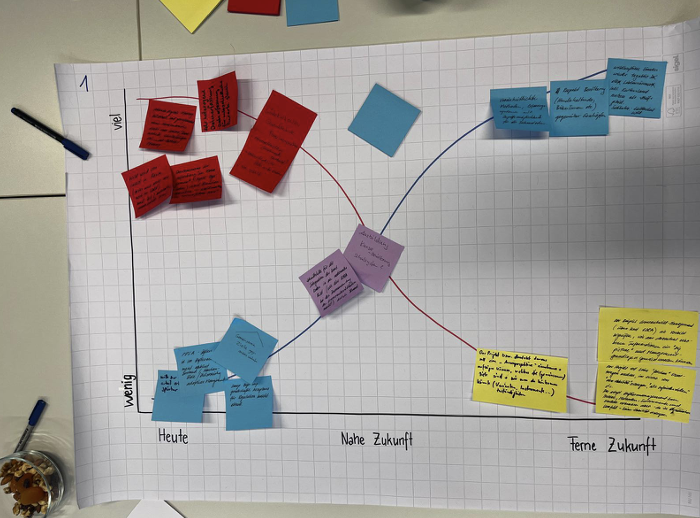
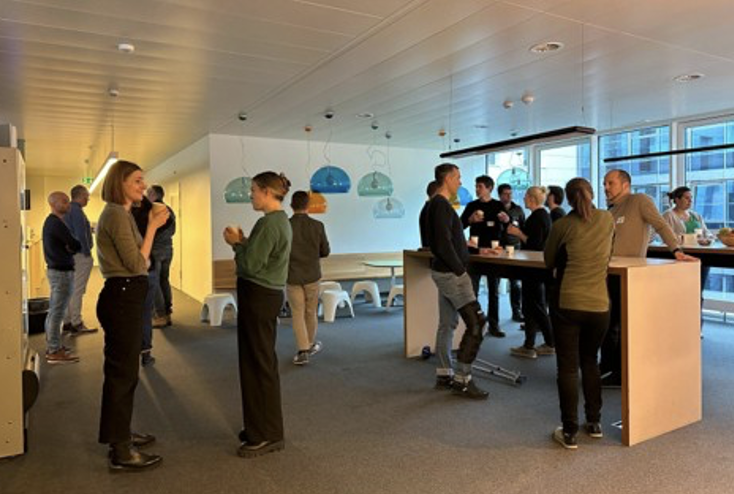
Workshops & Surveys Co-creation is at our core. We conduct regular surveys and workshops with hunting associations, forestry services, cantonal authorities, and the public. These events utilize focus groups to define challenges, validate our models, and ensure the final management framework reflects the diverse values of Swiss society.
Data and Data Standards
The Online Platform
What information has to be taken and stored for what animal? Part of the work will be put in creating a unified set of data that will be collected in homogeneous and standardised way across the cantonal boarders.
Therefore a database will be created with the goal to collect and store the agreed data and allow for continuous modelling and analysis.
Work Packages
For a positive outcome of this framework, a particular focus is set on data. From information collection, to information quality, analysis and forecasting, everything revolves around a sound data system.
The project includes therefore six Work Packages that ensure the quality of the data.
The 4 Phases
The whole Adaptive Management Process can be summarised in four distinct phases: